Category: Masterpieces by Korean Painters

Experience Korean paintings that convey emotion and storytelling through the use of space.

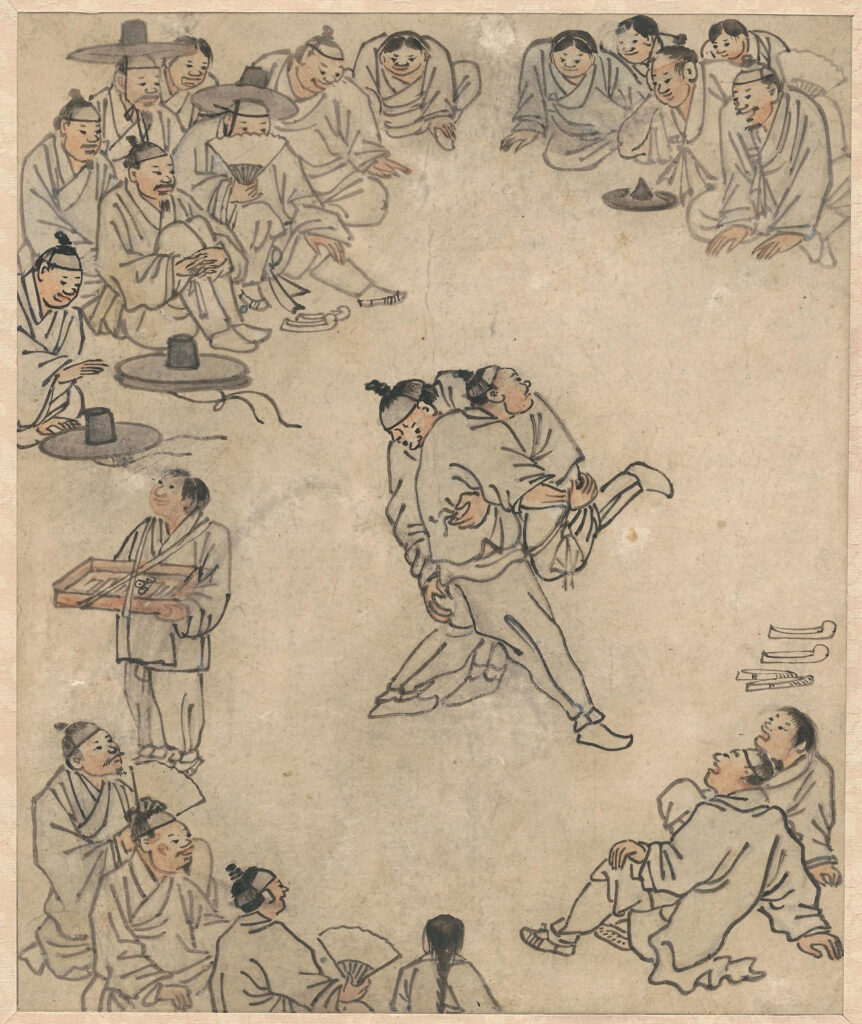
  • Who Is the Most Realistic Person at the Ssireum Match?

    Image Source: emuseum, https://www.emuseum.go.kr/

    [Artwork Information]

    • Title: Ssireum (Korean Wrestling)
    • Artist: Kim Hong-do (Danwon)
    • Period: Late Joseon Dynasty
    • Genre: Genre Painting (Pungsokhwa), depicting the dynamic life of the common people

    Beyond the Two Wrestlers
    When we look at Kim Hong-do’s representative genre painting, Ssireum, our eyes naturally gravitate toward the two men wrestling in the center. However, if we shift our perspective, a completely different scene begins to emerge.

    A Diverse Crowd Gathered in One Place
    Look closely at the painting, and you’ll see several men wearing Gat (traditional black hats). In the Joseon Dynasty, the Gat was a symbol of adulthood and specific social status.

    This tells us that the audience wasn’t just made up of commoners; members of the Yangban (aristocracy) and Jungin (middle class) were all mingled together. What’s truly fascinating is that they are all sitting in the same spot, watching the same match. The Ssireum ring was a rare space where social hierarchies momentarily dissolved.
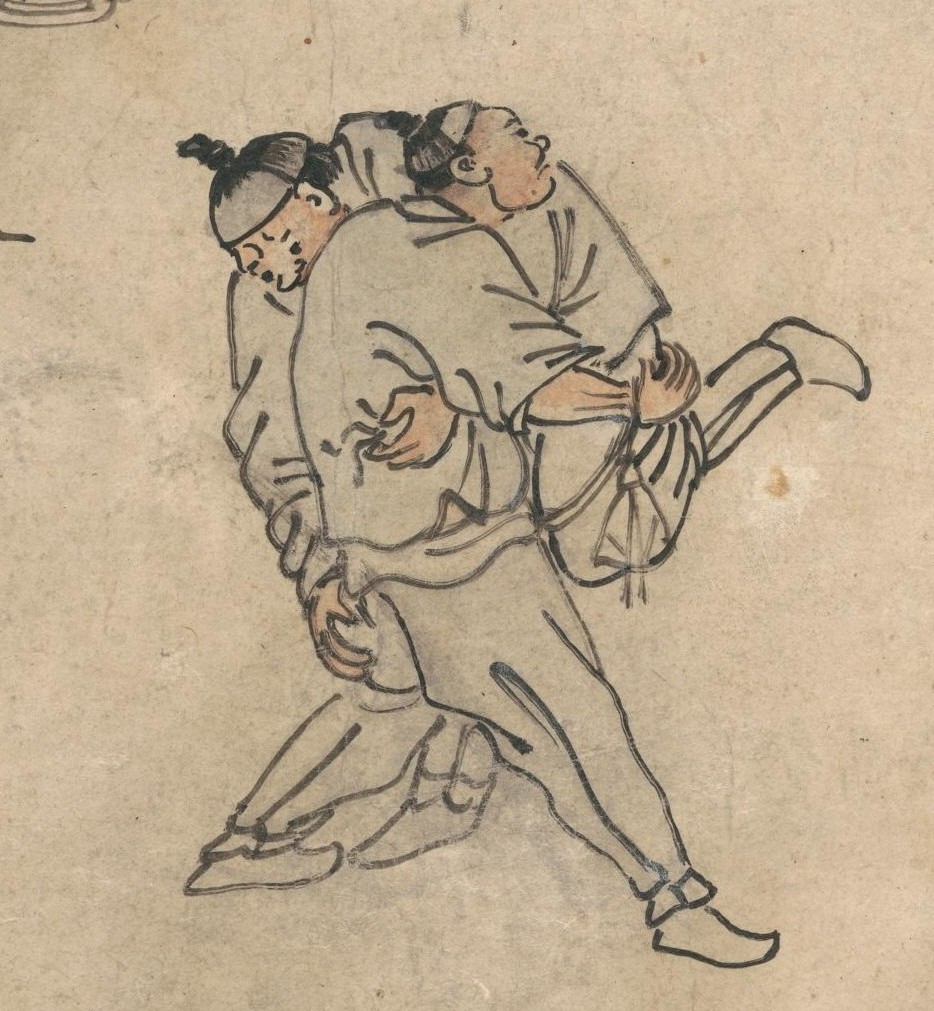
    Who Are the Wrestlers?
    Were the men in the center professional athletes like we see today? Not at all. In the Joseon era, Ssireum was not a specialized profession but a test of strength among villagers. They were ordinary farmers competing during festivals or market days.

    When Did This Scene Take Place?
    Matches like this typically occurred on days when large crowds gathered—most notably during holidays like Dano, on market days, or at village festivals. This wasn’t just a sports arena; it was a grand event where people met to enjoy, laugh, and eat.
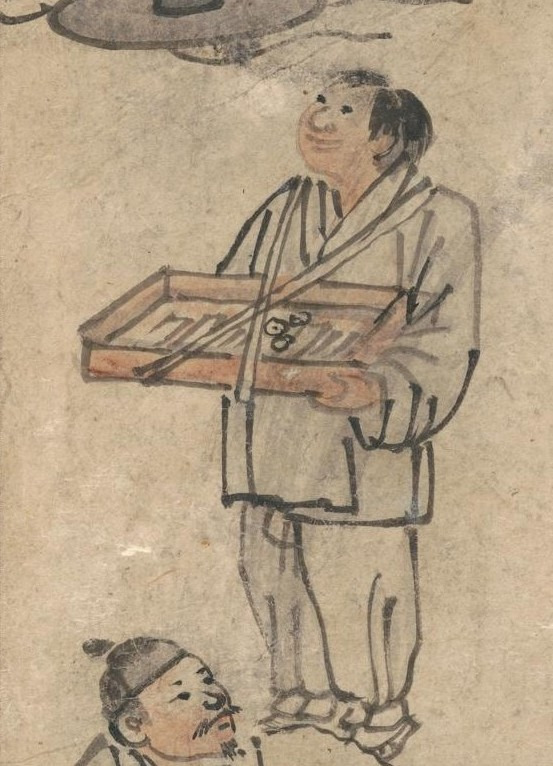
    The Other Protagonist: The Toffee Seller
    Now, look at the painting again. On one side, you’ll spot a young boy selling Yeot (traditional Korean toffee). This boy has no interest in the match. He doesn’t care who wins or loses; he is simply there because the crowd provides an opportunity to sell his sweets.
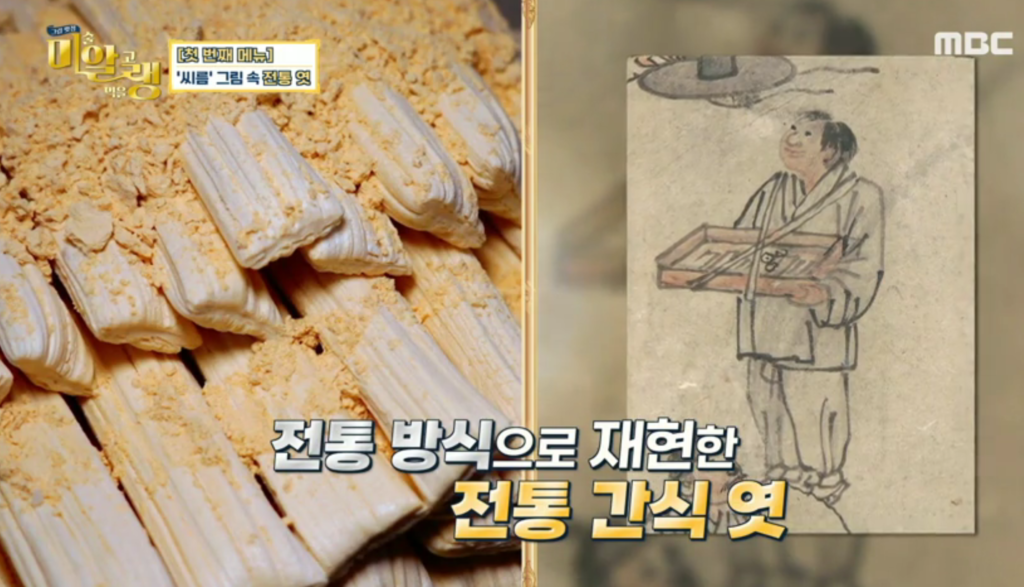
    Image source: https://tv.nate.com/clip/4251369
    A scene from Kim Hong-do’s Ssireum alongside a real-life recreation of traditional Korean taffy(yeot).

    The True Portrait of the Era
    Through this single scene, we can see the multi-layered reality of Joseon life:

    • Some are testing their strength.
    • Some are spectating for leisure.
    • Others are conducting business amidst the excitement.

    All of this happens simultaneously in the same space. Ssireum is more than just a painting of a wrestling match; it is a vivid snapshot of the Joseon era where:
    ✔ Various social classes gathered.
    ✔ The community celebrated together.
    ✔ Economic activity took place.

    Perhaps the most realistic observer of the world in this masterpiece is that young boy, quietly focused on his trade while the world cheers around him.
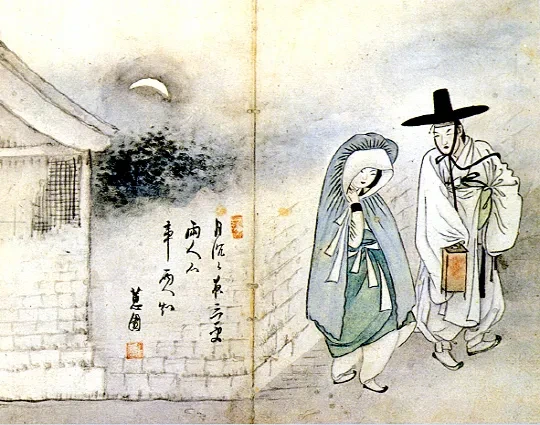
  • Lovers Under the Moon (Wol-ha-jeong-in): A Secret Encounter in the Joseon Night

    Image Source: Yonhap News, [Article on ‘Lovers under the moon](https://www.khan.co.kr/article/201203072150215)

    [Artwork Information]

    • Title: Lovers Under the Moon (Wol-ha-jeong-in)
    • Artist: Shin Yun-bok (Hyewon)
    • Period: Late Joseon Dynasty
    • Genre: Genre Painting (Pungsokhwa), expressing human emotions and reality

    A Story Hidden Under the Moonlight
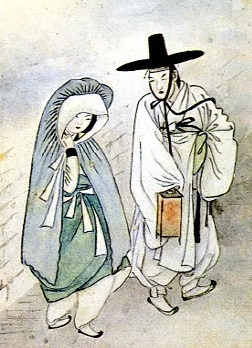
    A man and a woman meeting secretly at a wall’s corner in the middle of a Joseon night. This scene is captured in the masterpiece Lovers Under the Moon.

    This painting is more than just a romantic scene; it encapsulates the love, society, and even the precise “time” of the late Joseon period.

    What Was Shin Yun-bok Trying to Capture?
    In a rigid society centered on the elite Yangban class, Shin Yun-bok was an artist who dared to depict honest human desires and emotions.

    Specifically, Lovers Under the Moon portrays a “clandestine” love rather than a formal relationship. Since free romance was difficult under the social norms of the time, this painting serves as a subtle twist on social conventions.

    Reading the Scene
    The painting is filled with meaningful elements if you look closely:

    • The Wall’s Corner: A hidden, private space.
    • The Distance Between the Two: A cautious and careful relationship.
    • The Nighttime: A moment escaped from the watchful eyes of society.
    • The Moon: The most crucial element of all.

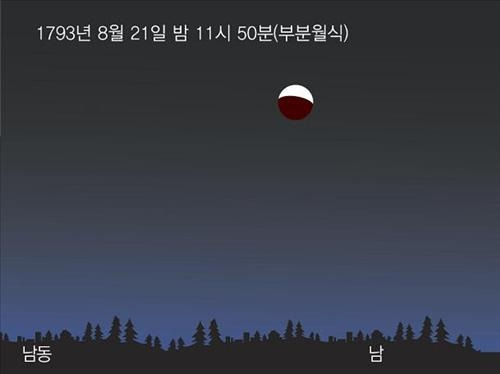
    The Surprising Fact Revealed by the Moon


    (Image Source: Yonhap News, Article on Wol-ha-jeong-in)

    The moon in this painting is not just a background. Astronomers have analyzed its shape to estimate when this piece was created.

    • Shape of the Moon: Representing a partial lunar eclipse.
    • Inscription “Ya-sam-gyeong” (夜三更): Indicating around midnight.
    • Setting: A summer night.

    Based on these findings, it is estimated to be around August 1793. The painting literally allows us to “read” time.

    Love and Reality in the Joseon Era
    Joseon was a Confucian-centered society where free romance was restricted, and social status and norms were strict. This makes the encounter in the painting even more special.

    Love Exists, but It Cannot Be Revealed.
    This tension is precisely what makes Lovers Under the Moon so captivating even today.

    Why This Painting Remains Beloved
    Lovers Under the Moon is not just a “pretty” picture. It contains:

    1. Human Emotion (Love)
    2. Social Norms (Constraints)
    3. Traces of Time (The Moon)

    Looking at this masterpiece, we realize one thing: “Even in that era, love was just the same as it is today.”